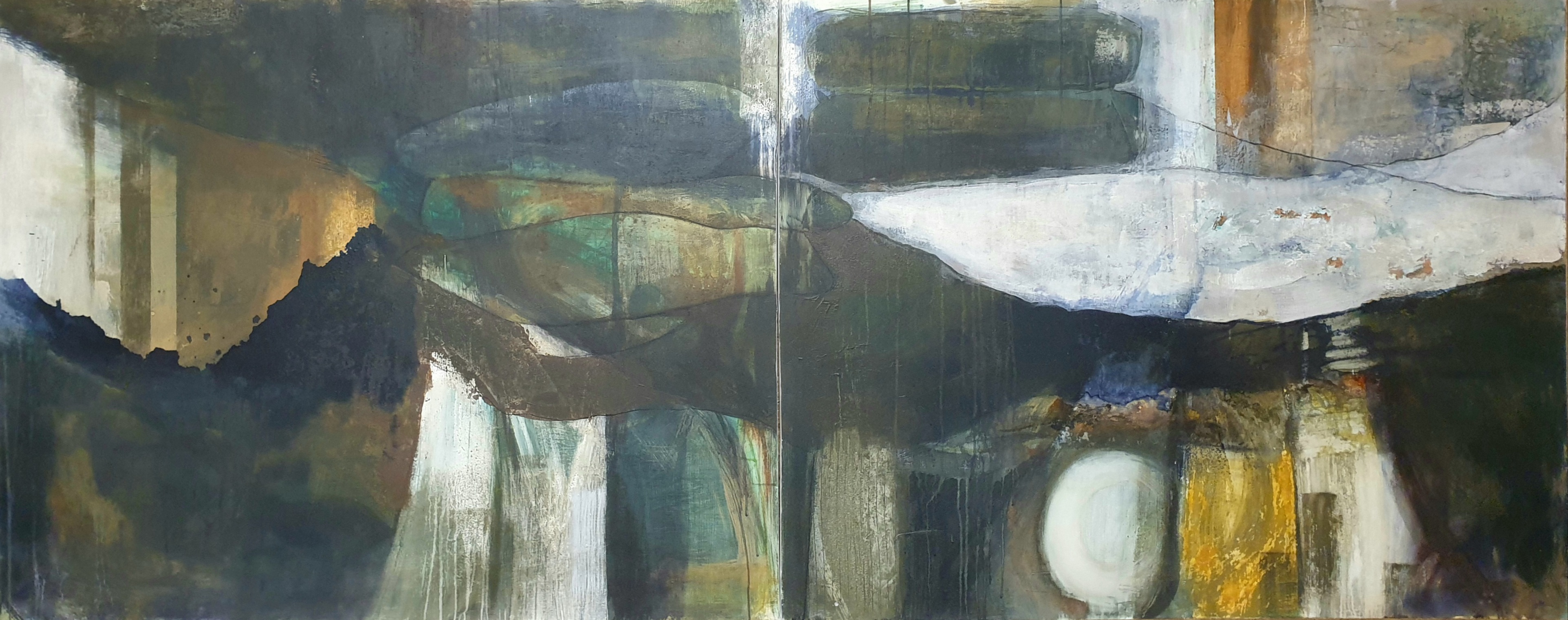
How to Abstract a Landscape: From Looking to Making
How to Abstract a Landscape: From Looking to Making
Abstracting a landscape isn’t a trick - it’s a way of paying attention. When you’re learning how to abstract a landscape, it’s easy to feel pulled between two extremes: copying what you see, or letting go so completely that the painting loses its anchor. The sweet spot lives somewhere else, between looking and making, between detail and atmosphere.
For me, abstract landscape painting begins long before paint touches the surface. I live and work in Cornwall, and much of my studio practice starts outdoors - walking, watching weather move across the land and sea, and gathering quiet cues that later become marks, shapes, and atmosphere. I return to a simple rhythm again and again: Pause, Notice, Filter, and then Gather, Reconnect, Apply.
This isn’t a set of rules. It’s a framework for staying close to what matters, while giving yourself permission to leave the rest behind.
Pause: make space for the landscape
To pause is to stop performing. It’s the moment you step out of “getting it right” and into presence.
In landscape abstraction, that pause matters because it creates room for a different kind of seeing - one that isn’t hunting for objects to copy, but listening for what the place is actually offering. Sometimes that means closing your eyes for a moment. Sometimes it means simply standing still long enough to notice what your body already knows.
Notice: what are you drawn to?
When you notice what you notice, you’re paying attention to more than the obvious. Not just “a cliff” or “a field,” but the elements that make that landscape look and feel interesting to you.
This is where the abstract landscape painting process becomes personal, because two artists can stand in the same place and notice completely different truths. Your attention is already shaping your voice.
Filter: choose what matters (and let the rest go)
Filtering is where your voice begins to form. You’re not trying to include everything. You’re selecting what carries meaning: a shape, a line of movement, a colour relationship, a sense of distance, a memory of light.
This is the quiet power behind how to paint abstract landscapes that feel intentional rather than random. You’re not removing things to be clever, you’re removing things so what matters can speak.
Gather: collect the raw material
Gathering is about collecting fragments: visual, emotional, sensory. It might be a palette you can’t forget, a repeated curve in the land, or the way the wind rearranges everything.
In my abstract landscape painting practice, these fragments become ingredients I’ll return to in the studio. A few quick sketches, a handful of words, a few collected materials - often it’s the smallest notes that carry the most energy later.
Reconnect: return to the feeling, not the photograph
To reconnect is to come back to the reason you wanted to paint this landscape in the first place. Not the literal view, but the experience of it.
This is where abstraction becomes less about simplifying and more about translating - turning place into a visual language that feels true. If you’re working from reference, let it support you, not lead you. The painting doesn’t need to prove anything. It needs to hold something.
Apply: move from looking to making
Applying is where you let the painting become itself. The goal isn’t a perfect representation, it’s a living response.
When you approach how to abstract a landscape through Pause → Apply, you’re not forcing a result. You’re building a relationship with what you’ve seen, and allowing the work to hold atmosphere, movement, and meaning. This is the part where you make choices: what to repeat, what to exaggerate, what to quieten, what to leave unresolved.
Abstract landscape painting: what matters most
If I could offer one steadying thought, it’s this: abstraction isn’t about making the landscape unrecognisable. It’s about making it yours. What matters most is not how accurately you describe a place, but how honestly you respond to it.
If you’ve been searching for how to abstract a landscape without losing your way, let this framework be a companion. It brings you back to attention, back to choice, and back to the kind of making that feels like freedom.
If you’d like a gentle starting point, my free guide 3 Ways to Approach Abstraction will help you slow down, choose what matters, and begin with more confidence.
If you want to go deeper, my Authentic Abstraction course builds on this full process and guides you step by step from gathering in the landscape to making finished work in the studio.
FAQs: how to abstract a landscape
What does it mean to abstract a landscape?
To abstract a landscape means you’re translating what you experience - space, weather, rhythm, memory - rather than copying every detail. You choose what to emphasise and what to leave out, so the work holds meaning and atmosphere in your own visual language.
How do I choose what to leave out in abstract landscape painting?
Start by noticing what you’re most drawn to: a horizon line, a shape family, a colour relationship, a sense of movement. Then filter ruthlessly, remove anything that doesn’t support that core feeling. Leaving things out isn’t a loss; it’s how clarity arrives.
Is abstract landscape painting good for beginners?
Yes, especially if you use a simple framework. Beginners often feel pressure to “get it right”, and abstraction can be a relief: it gives you permission to explore shape, value, and mark-making without needing perfect drawing. Start small, repeat, and let your attention lead.
What’s the difference between abstract and representational landscape painting?
Representational landscape painting aims to describe what a place looks like in a recognisable way. Abstract landscape painting focuses more on how a place feels, its structure, energy, and atmosphere, using simplification, exaggeration, and personal choices to translate the experience.
How do I find my style in landscape abstraction?
Style often appears through repetition: what you consistently notice, the marks you return to, the shapes you simplify, the palettes you favour. Keep gathering, reconnecting, and applying over time, and your preferences will start to organise themselves into a visual signature.
